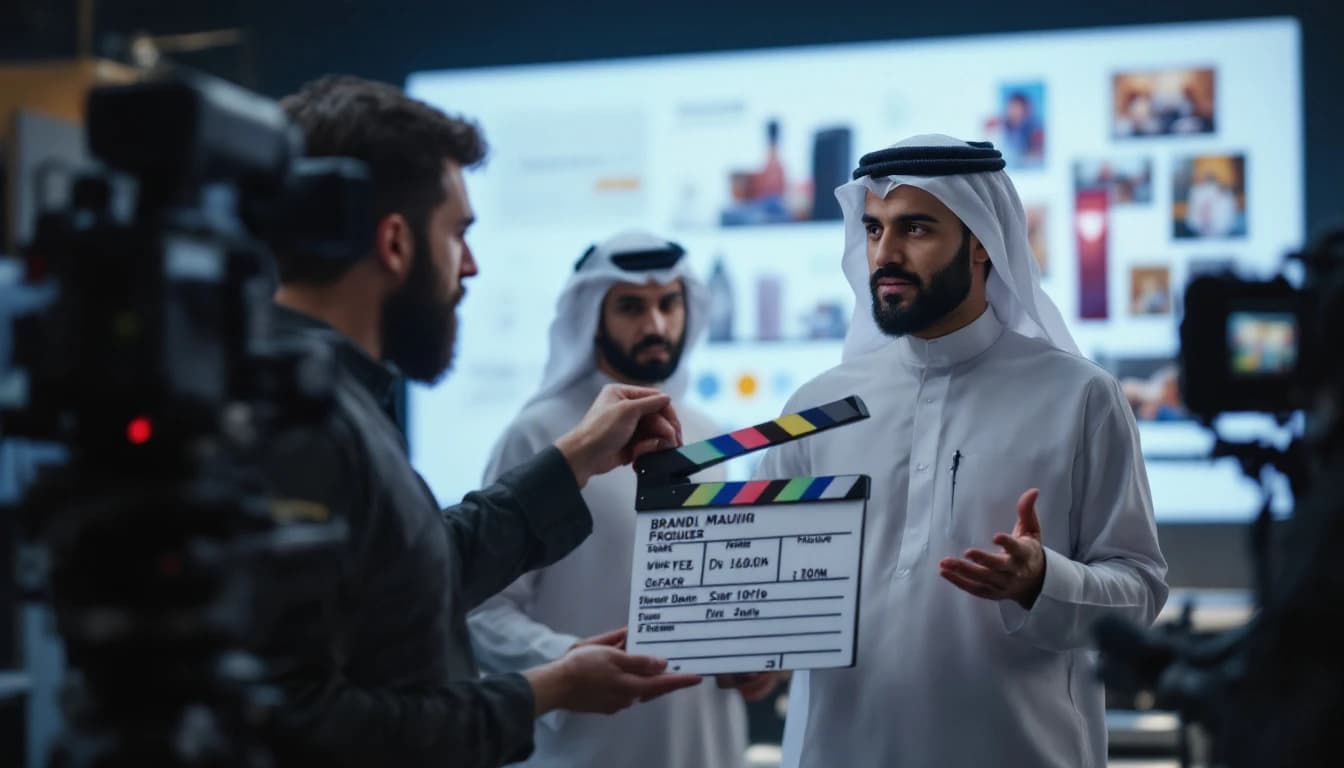
How to Choose the Right Film Production Partner (Before You Sign Anything)
The wrong production partner doesn't just waste your budget — it costs you time, creative momentum, and sometimes the project itself. Here's how to evaluate before you commit.
Choosing a film production partner is one of the highest-stakes decisions you'll make on any project. It's not just about who has the nicest reel or the fastest quote turnaround. It's about who can actually carry your vision from a brief to a finished film — without losing the idea somewhere in the middle.
Here's what to actually look for.
Start with the reel, but don't stop there.
A production company's portfolio tells you what they've done. What it doesn't tell you is who drove the creative, how the client relationship worked, or whether those results were repeatable. When you review a reel, ask: does this work feel like it has a consistent point of view, or does it feel like a collection of unrelated executions? A strong partner has an aesthetic sensibility — a way of thinking about image, story, and tone — that shows up across different categories and formats.
If everything on the reel looks like it was made for someone else's brief with no fingerprint of the studio's own thinking, that's worth noting.
Evaluate their pre-production process, not just their production capability.
The most expensive mistakes in film production don't happen on set. They happen in the weeks before the camera turns on — when the brief is misread, when the treatment is approved without enough scrutiny, when locations are locked before the concept is truly solid.
Ask any potential partner to walk you through how they handle pre-production. Do they have a structured development phase? Do they push back on briefs that are unclear? Do they bring creative thinking to the table before production planning begins, or do they jump straight to logistics?
A partner who treats pre-production as a formality will cost you more in revisions and reshoots than they saved you in their initial quote.
Understand who is actually working on your project.
Many production companies win business on the strength of senior talent, then hand execution to junior teams. This is industry-standard practice in some places — and it's worth understanding before you commit.
Ask directly: who will be the creative lead on this project? Who handles client communication day-to-day? What does the internal team structure look like versus what gets freelanced out? There are no wrong answers here, but there are answers that should inform your decision. A studio that is transparent about its structure and confident in its team — at every level — is a studio that takes accountability seriously.
Look for strategic thinking, not just execution capability.
The best production partners don't just make what you ask for. They help you figure out what you actually need. There's a real difference between a company that receives a brief and a company that interrogates one.
When you present your project, notice whether they ask questions about your audience, your distribution plan, the role this film plays in a broader campaign. A partner who only asks about deliverables and deadlines is optimizing for production. A partner who asks about outcomes is optimizing for results.
Consider the full production ecosystem they operate within.
Film production doesn't exist in isolation. It connects to strategy, to post-production, to sound design, to distribution. A partner who has strong internal capabilities across these disciplines — or deep, trusted relationships with specialists — gives you continuity. The alternative is a fragmented process where your project gets handed off between vendors who have never worked together.
Continuity matters because tone matters. The color grade, the music, the sound mix — these aren't finishing touches. They're part of the same creative conversation that started with the first treatment.
Finally, trust the communication dynamic early.
How a studio communicates during the pitch phase is how they will communicate during production. Are they responsive? Are they specific? Do they listen, or do they present? Do you feel like a collaborator in the conversation, or an audience for their capabilities deck?
Production is a high-pressure environment. Deadlines compress, decisions have to be made quickly, and creative disagreements happen. The partner you want is the one where the communication foundation is strong enough to handle all of that without the relationship fracturing.
The right production partner doesn't just deliver a film. They deliver a process you can trust — and a result that justifies everything that went into making it.
Want this kind of thinking on your brand?
The house puts the same craft behind the work it makes. Tell us what you're building.